Tuesday, September 30, 2014

I Love Web Comics: The Ensign Sue Trilogy

I’ve cited Interrobang Studio’s Sue Trilogy (written by Clare Moseley and art by Kevin Bolk) a few times in my discussions of the Mary Sue tropes, so now, as the story is winding to its conclusion, I thought I’d post a review. Billed as a “Trek-tastic Parody,” this is a web comic that is full of things that I love. It’s got Star Trek, it’s got Doctor Who, and it’s full of nerdy references and inside jokes that I can appreciate even when I don’t get them. I love playing with tropes and this comic certainly does that.
Kevin Bolk’s caricatures of the nu-Trek crew, all the incarnations of the Doctor, Sherlock Holmes, and a vast array of other fan favorites are cute, clean, simple, instantly recognizable (including both Zachary Quinto and Leonard Nimoy as Spock), and impressively expressive. Clare Moseley’s dialog is funny and pitch-perfect; you can hear the actors’ voices in every speech bubble including McCoy’s wisecracks and or Tom Baker’s Doctor in conversation with Benedict Cumberbatch’s Sherlock; even when Kirk calls Spock a jerk.
Book 1, Ensign Sue Must Die! Takes place shortly after the end of 2009’s Star Trek movie with the arrival on the Enterprise of the ship’s new medical officer Ensign Mary Amethyst Star Enoby Aiko Archer Picard Janeway Sue (what? No Sisko?). Ensign Sue has flowing blonde hair with an exotic streak of color and a beauty mark on her cheek that seems to change from panel to panel. Ditto with her eye color. She also favors fishnet stockings. It’s not just that Ensign Sue lives in her own little world, she believes everyone else lives in it too and no one on the crew seems to be able to get rid of her. Even beaming her through an ion storm only results in an encounter with Ensign Sue’s evil but equally self-absorbed counterpart from the “Mirror Mirror” universe. Spock Prime (played in the movies by Leonard Nimoy) finally provides the solution to the nu-Trek crew by pointing them to a Star Trek trope that’s even bigger than Mary Sue.
Book 2, Ensign Two: The Wrath of Sue, opens with the arrival of the Doctor (Number 10, played by David Tennant) aboard the Enterprise. The Doctor grimly informs Kirk and Spock that in ridding themselves of Ensign Sue, they’ve only managed to unleash her on the rest of the multiverse. He solicits the Enterprise crew to help him track down and capture the various Sue incarnations across different dimensions. What follows is a romp through the worlds of Star Trek: The Next Generation, the Marvel Universe, the DC Universe, Harry Potter, and others where each time another Sue incarnation has disrupted the fabric of reality. The Doctor and the Enterprise crew capture the Sues, including the original Ensign Sue, never realizing until it’s too late that they’re being manipulated by the sinister power behind the Sues. Book 2 ends on a cliffhanger with the tables turned, most of the crew captured, and Kirk floored by an unsettling piece of news.
Then in Book 3, Ensign3 Crisis of Infinite Sues, things really start to get nuts. As of this writing, the story is still ongoing with the last page scheduled to be posted on the web site sometime in December. However, you can order all three books in full-color dead-tree format from Interrobang’s store like I did and read all the way to the end ahead of time. While $30 for all three books is pretty pricey for the raw materials you get back, the real value is in the story. I’ve already reread them a few times and will probably continue to do so as long as they’re sitting out. So, yeah. Worth it.
Tragically, the books do not include this sublime poster.

There’s a lot to love about this series. There are enough nerdy Easter eggs and cameos to appeal to fans of just about everything. The comments accompanying each page are also always a good read. Genuine laugh-out-loud funny moments are reliably frequent, but then Moseley and Bolk and turn around and hit you right in the feels. (I’m sure it was just a little dusty in the room when I got to the end of Book 3.) The shout outs to Paula Smith, who coined the term “Mary Sue,” were also very cool. Finally, like any good satire, the Sue trilogy makes you think; in this case, about what makes a character a Mary Sue or how even the shallowest character can grow to have interesting depths.
The Sue Trilogy begins here with Ensign Sue Must Die! and updates Fridays. I choose to believe that the events chronicled here actually happened between Star Trek and Star Trek into Darkness.

Sunday, July 27, 2014

But Enough About Me: Stuff I Wish I'd Said, Santa Cruz


Scene: My daughter and I encounter four teens sitting on the sidewalk outside Pizza My Heart in downtown Santa Cruz. One of them asks if I can spare some money so they can get some pizza. I say, “Sorry, no.” They say, “’s cool.”

What I should have said: “Blackjack! Keno! Bingo! Craps! Jeez! I haven’t seen you guys since the casino caper! Listen, I am so sorry for bailing on you guys, but when I saw you had grabbed those boxes of Mexican fireworks instead of the plastique, I knew the Baroness was going to go berserk, so it was every man for himself. Anyway, looks like you all managed okay, though I see Solitaire’s not with you. I wouldn’t worry though. I’ve known her since third grade and I have yet to see that chick not land on her feet. She’s fine wherever she is. By the way, this is my daughter. She’s totally really my daughter and not a shape-changing alien nano-collective life form.

(I glance up the street at some other pedestrians.)

Uh-oh! Looks like a couple Enforcers. Just play dumb; if you pretend not to see them, they’ll probably ignore you. We’ll just duck in here and sneak out the back. Come on Z-03. I mean, um, Zoe.”

Monday, June 30, 2014

Just Enough Trope to Hang Myself: There’s Something Else about Mary Sue

Is the term “Mary Sue” sexist? Well, obviously it never occurred to me to consider this angle of the trope. Pesky Y chromosome. I was looking at it purely as a creative exercise, but the question is a valid one, especially in these days of angry loud-mouthed tiny nerd boys behaving horribly because they don’t want no icky cootie fangirls in their clubhouse.
 
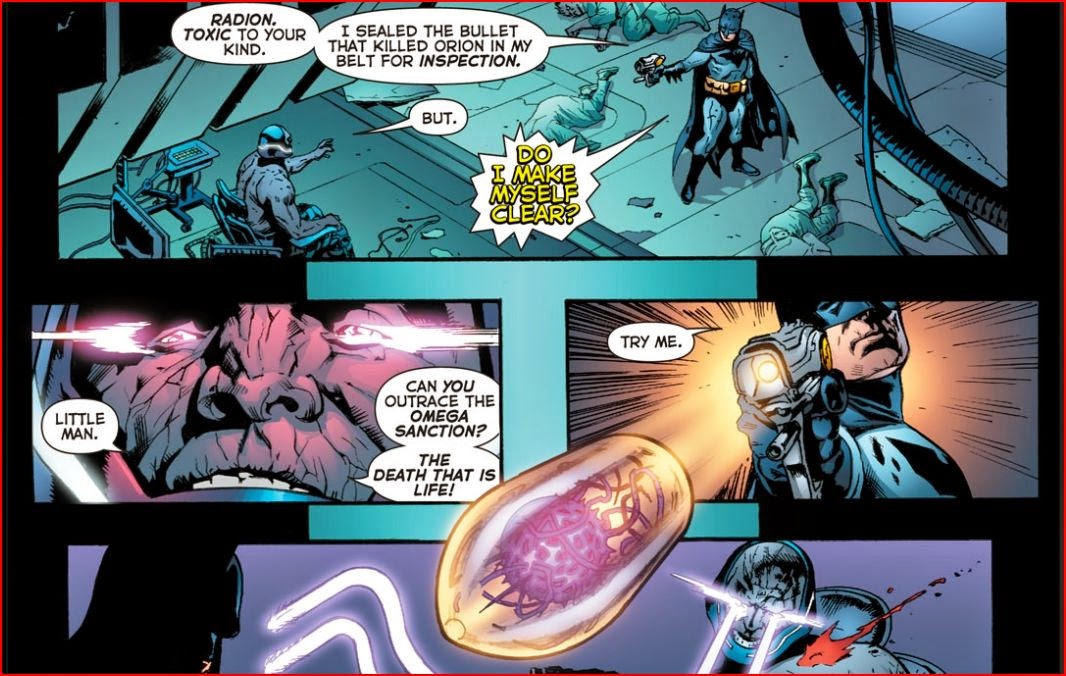
I was pointed to a couple of blogs that tackled this criticism. The Adventures of Comicbook Girl’s post, “Mary Sue, what are you? or why the concept of Sue is sexist,” points up the double standard of how a tragically orphaned character who grows up to be an attractive, wealthy, genius, Olympic-level athlete who rights wrongs, is always right, is ten steps ahead of all foes, and has the unreserved admiration of everyone is a Mary Sue. Except when it’s Batman. The point being that these characteristics are okay for a male character but are subject to scorn and ridicule when applied to a female character.

Batman can defeat anyone, given adequate prep time. Here, he has a bat-anti-Darkseid bullet in his utility belt.


Meanwhile, Feminist Fiction argues that there should be more Mary Sues and points out that there is only one female Avenger in the movie and she is one of only two members with no super powers. Again, the male characters—Captain America, Iron Man, Thor, and the Hulk—are all unapologetically powerful while the Black Widow has to make due with … well, actually I disagree with the author on that point. The Black Widow is pretty much awesome every time she’s on screen from the interrogation she conducts while tied to a chair to being the one who shuts down the stargate in the final battle. She can basically do anything Captain America can do, only without the shield and the super soldier formula, plus she’s a master spy. That’s why everyone on Agents of SHIELD is all “Even Romanoff couldn’t have escaped from this” and “Only Romanoff ever beat that.”

No, I’m Batman
Those points considered, it’s important to go back and have a look at the time, circumstances, and intent under which Paula Smith created the character Lt. Mary Sue, the main character of “A Trekkie’s Tale.” It was 1973; there was no Internet or desktop publishing. If the Star Trek fan community wanted to share ideas or stories, it had to be through hand-made, hand-mailed fanzines created using typewriters and mimeograph machines. These fanzines, which usually contained ads for other fanzines, could be mailed to subscribers or traded, passed around, or sold at Star Trek conventions, the very first of which had been held only a year earlier.
 You kids have it so easy with your new-fangled "Internet."
 

Smith described these early days of handcrafted fandom and the creation of Lt. Mary Sue in a fascinating 2010 interview (Walker, Cynthia W. 2011. “A Conversation with Paula Smith.” Transformative Works and Cultures, no. 6. doi:10.3983/twc.2011.0243):
It all goes back to the early 1970s, when Star Trek fandom was just breaking away from mainstream science fiction fandom. I went to a lot of conventions around that time and I bought every zine I could lay my hands on. It was just an explosion of mimeograph and hectograph and ditto; very few zines were even photocopied back then. I read everything. Some of it was pretty good. Some of it was extremely good. But an awful lot of it was just plain awful.
As Theodore Sturgeon said, 90 percent of everything is crap. The amazing thing was, the crap had so much of a pattern. I’m very much a pattern seeker, and you could see that every Trek zine at the time had a main story about this adolescent girl who is the youngest yeoman or lieutenant or captain ever in Starfleet. She makes her way onto the Enterprise and the entire crew falls in love with her. They then have adventures, but the remarkable thing was that all the adventures circled around this character. Everybody else in the universe bowed down in front of her. Also, she usually had some unique physical identifier—odd-colored eyes or hair—or else she was half-Vulcan. The stories read like they were written about half an hour before the zine was printed; they were generally not very good.

It was the type of story that begged for a parody, so for the second issue of her Star Trek fanzine, Menagerie, Smith…
… tossed off “‘Gee, golly gosh, gloriosky,’ thought Mary Sue as she stepped on the bridge of the Enterprise.” Lieutenant Mary Sue—that’s what I called her just to give her a name. And the piece was—what? Probably two hundred words. It was half of one of our reduced columns. It wasn’t very much. I really just retold the story of that quintessential Mary Sue. It was a parody. … it might have died right there, but I began doing LoCs—letters of comment—and reviews of zines in other zines. Anyway, because this was still the early 1970s, there were still a ton of these stories coming out. So, when we wanted a shorthand to refer to them, Sharon and I began to call them “Lieutenant Mary Sue” stories. We explained why the first couple of times we used it, but the term caught on …

So, Lt. Mary Sue was a parody of a poorly written character. Why a female character? According to Smith, 90 percent of Trek fandom at the time was female. That’s who was writing the stories.
“Trek fandom was the mirror image of science fiction fandom. I would say 90 percent of science fiction fandom at the time was men and 10 percent was women, and there was a reverse 10-to-90 men-to-women split in Trek fandom.”

So, no sexism in the original intent. However, through use and misuse over the years, the term “Mary Sue” has gone from a call out of a thinly developed character to an insult leveled at a female character that has any agency in a story whatsoever. That’s stupid. And annoying, because I wanted to explore this archetype without getting caught up in a lot of messy gender politics. Nonetheless, names have power and there are legitimate reasons to find the name “Mary Sue” off-putting. So let’s go with PC or “Pat Chris” as a gender-neutral alternative for the sake of this discussion. Besides literally being “PC,” it can also stand for a character that’s “Poorly Conceived” or perhaps the author’s “Pet Character.”

(In Dungeons & Dragons, there is no foe more fearsome than the Dungeonmaster’s Pet Character. I had one in high school: His name was Victor Anthony Kas. He was a paladin with a tragic backstory and was heir to the Sword and Armor of Kas, destined to become the evil Kas Dester. Eventually the whole campaign was about him. Despite that, I guess I had enough going on in that campaign that everyone was able to stay engaged and have a good time. The story arc was about getting Kas to his redemption, but in the end, the whole thing was about my Pet Character and the outcome was pretty much preordained, so, honestly, it was not very good dungeonmastering.)

It's Pat

So what makes a character a PC and what is it about PC that induces vision-distorting eye rolls? It’s important to remember that PC is a native of the fan fiction genre. A PC, in fan fiction, is often a new main character dropped into a defined setting with established characters. If that new main character is the center of attention, solves everyone’s problems, and causes the existing characters to start acting out of character (for instance, Spock weeping openly at the character’s beauty and goodness or Kirk suddenly becoming bi-curious), then it’s definitely a PC. Or as Paula Smith put it in the above-cited interview, “presence of a [PC] in a story is like a black hole, a neutron star, because it warps everything else out of their normal orbits.”


Your audience does not love your pet character.

Basically, Pat Chris is in the story more for the author’s pleasure than any would-be readers. This is charmingly illustrated in a seven-page comic called “Fan Fiction” by Shaenon K.Garrity and drawn by Phil Foglio. In it, a girl inserts a new character into a bedtime story about some famous heroes, much to the annoyance of her younger siblings. Luckily, Mom’s a bit more sympathetic.

 
Once we leave the genre of fan fiction, it’s a little harder to point to the new character that doesn’t belong and PC gets a little harder to pin down; that’s where the misuse of the term really gets going. The criticism is leveled, justly or unjustly depending on the story, that the main character is too good/competent/powerful/whatever. The implied and/or perceived follow-up “for a woman” isn’t always there in all discussions, but it’s there often enough and loudly enough that the accusation of sexism has some merit. Particularly given that a male character displaying the same properties tends to get a free pass.
Seriously, why does one young, attractive, charismatic, hyper-competent main character induce eye rolls and snorts of derision while another becomes a cultural icon? Take the Doctor. Or Sherlock Holmes. Most stories, they arrive on the scene and resolve the problem to the great admiration of those around them and then leave, usually with little or no character development on their part. How is it that no one labels either of these guys a PC? It’s not just because they’re men. Obviously, the answer is because they’re British.
What is it that makes these two interesting characters rather than PCs? Perhaps the key element lies in how their stories are structured. While Holmes and the Doctor are the main characters of their respective series, their stories are filtered through the points of view of their sidekicks, Dr. Watson and the various TARDIS companions, respectively. Imagine a solo Sherlock Holmes story or a solo Doctor Who story: The main character is brilliant, a step ahead of everyone else, and fairly smug about it. That’s when readers or views would start to get annoyed with him.
(The one solo Doctor Who episode that comes to mind is “The Deadly Assassin” from the classic series starring Tom Baker. In it, the Doctor returns to Gallifrey and gets caught up in a deadly game of cat-and-mouse with his arch-nemesis, the Master. In this instance, going against the formula works and works well, but it’s a very different kind of story.)
On Gallifrey, being smug and brilliant is one of the entrance requirements.

I mentioned Batman earlier. Very early in his career, Batman got paired with Robin, and that was purposely to make him more accessible to readers. Batman goes long stretches without a sidekick, but inevitably the writer or editor will come to decide that it’s time for him to have a Robin again. I haven’t kept close count in recent years, but there are at least a half-dozen characters who have taken on the role of Robin.

Robert Langdon, the main character of The Da Vinci Code and other best-selling novels by Dan Brown, is described as a fit, rugged Harvard professor all the hot young coeds are in love with. Beyond that, there is not much that’s memorable about him, even with Tom Hanks playing him in the movie. That actually works to the story’s advantage. Langdon’s discussed a bit in the comments thread of Laura Miller’s Salon.com article of April 21, 2010, “A reader’s advice to writers: Beware of Mary Sue." Miller speculates that “Since Brown’s books are all treasure hunt and chase scenes, Langdon isn’t that intrusive. His character or personality isn’t ever a focus, and a lot of Brown’s readers can’t even remember his name. So I think he’s close, but not really a [PC]; he just doesn’t take up enough of the book’s attention. However, it’s true that certain kinds of very plot-driven genre fiction seem able to get away with pretty flagrant [PCs].” Brown doesn’t invest a lot in his main character. Would it have been better with a stronger main character? Sure, but that’s not what drives these stories. What drives these stories are the cryptography, keys, symbols, codes, and conspiracy theories. Langdon’s function is to prevent the novel from being a long essay.
The Adventures of Buckaroo Banzai: Across the Eighth Dimension, gets away with having an improbably competent main character who’s a brilliant inventor, brain surgeon, rock star and adventurer by hanging a lampshade on the trope; it’s presented with a wink and a nudge. Buckaroo Banzai’s associates have worked with him long enough that they’ve all become pretty jaded about his exceptionalism. Jeff Goldlbum plays team newbie New Jersey to be the POV character. The other thing that gives the movie a free pass is that 1980s Peter Weller is just that awesome.


"No matter where you go, there you are."
 
Let’s look at a few female characters now: For example, here’s one whose name is actually Mary and she’s practically perfect in every way. It says so right on the label. She too sweeps in, is much beloved, solves everyone’s problems, and then leaves at the end with little or no character development on her part.
I don't have character arcs. I cause them.
However, Mary Poppins is more of a plot device than a main character. (I refer to the Disney movie here.) She’s something that happens to the other characters in the movie. Specifically, even more than to the children, she happens to this guy:
However, “Saving Mr. Banks” would not be workable as a movie title until many, many years later.
The story is all about Mr. Banks’ character arc. So, Mary Poppins is no PC. Besides, she’s also British.
Here’s another one: She’s the one girl in all the world with the power to fight the vampires and demons. Although her backstory is not as tragic as the trope usually calls for, it does feature her parents’ messy divorce, a brief stay in a mental institution after trying to convince people that vampires are real, and pretty much being run out of her home town. Fortunately, she’s got a couple of broody vampire boyfriends to help distract her from her troubles. So what is it that makes Buffy the Vampire Slayer so successful? Unlike Holmes or the Doctor, Buffy is the POV character throughout most of the series. She’s got her sidekicks/supporting characters, but they’re not there for the purpose of making the main character more accessible to the viewer. Buffy’s plenty accessible as she is. Being a young, strong, attractive chosen one doesn’t necessarily make a character a PC; those are things we look for in our heroes. However, a hero, as opposed to a PC, has one other key ingredient: In her interview, Paula Smith called it “headspace … you have to give the reader somewhere to fit into in the character.” Buffy has real flaws and doubts with which viewers can identify; she has the headspace that makes it easy to see the action through her eyes. Even though it’s series television and you know she’s going to survive the episode (or in those instances where she doesn’t, it will still work out somehow), the stakes still feel genuine. There’s no guarantee that her supporting cast will come out unscathed or that she’ll save the innocent bystander or that the bad guy will get away and later return as a fan-favorite regular.
Buffy’s relationship with her supporting characters works textually as well as meta-textually as seen in the season three episode, “The Wish.” Buffy without her friends is cold, humorless, scarred, and ultimately gets chomped on by the Master.
 

Another thing that makes Buffy work where a similarly situated PC might fail is her relationships with the other characters and, more importantly, theirs with her. Willow, Xander, and Giles are each fully realized characters who have their own problems and motivations. Said problems and motivations do not exclusively revolve around Buffy. Likewise, Buffy is not the solution or necessarily even involved in the solution to their problems. Each character from stalwart allies to vampiric love interests to the Big Bad of the season to minor villains has some headspace to latch onto.
 
At the other end of the spectrum, let’s have a look at the girl voted most likely to be called a “Mary Sue” by people who find the term “Mary Sue” demeaning to women, Twilight’s Bella Swan. Bella is attractive, very much the focus of other characters’ attention, largely pure of heart, and the creation of a first-time novelist housewife, so she certainly hits those PC tropes. However, if writing a PC is wrong, then Stephenie Meyer’s bank account doesn’t want to be right. How does Bella Swan succeed where so many others like her fail, and so many others wish she had failed? Her character has been described as lacking, passive, irritating, and the descriptors get less charitable from there. The one thing she does have though is headspace. In fact, Bella is mostly headspace; she’s a pair of eyes to check out and react to the hot-looking vampire and werewolf competing for her affection. It’s not a new formula; a Bella Swan is the main character of a good many of the paperbacks in the Romance section of the bookstore or airport newsstand.

You tolerate me because my boyfriends are so, so pretty.

For my last two character studies, I’m going to turn to the world of web comics. The first is Phil and Kaja Foglio’s Girl Genius. Agatha Heterodyne starts out as an ordinary university student who discovers that, in fact, she’s the latest in a long line of brilliant (and mostly evil) mad scientists, or “sparks.” Her father and uncle, both mysteriously missing since she was a child, were the legendary and heroic Heterodyne Boys. Her mother was the villainous Lucrezia Mongfish, also known as the Other, who started a war that nearly enslaved/destroyed all Europa. By the thirteenth volume of her adventures, she’s mastered her powers of mad science, been trained as an expert hand-to-hand combatant, is reclaiming her ancestral castle and homeland, has an army of loyal monsters at her command, along with a town full of adoring minions, and her suitors are two of the most powerful and brilliant (and handsome) sparks in Europa (and they’re also princes).
"Mary Sue?" Why, my three consecutive Hugo awards and I would be delighted to have that conversation with you.
Put that way, it sounds like a checklist for PC; you can hear the eyes rolling across the floor and down the hall. The thing is, Girl Genius is excellent. It’s funny, it’s smart (selected as one of Mensa’s top 50 web sites), and boasts three Hugo awards in a row for Best Graphic Story (after which the Foglios voluntarily took themselves out of the running) along with shelves full of other awards.

Stories of improbably exceptional characters predate actual literature. We love them. The take away here is that there’s nothing wrong with writing about an improbably exceptional character as long as you write her well.
Finally, let’s bring this long discussion full circle to the adventures of Ensign Mary Amethyst Star Enoby Aiko Archer Picard Janeway Sue by Claire Moseley and Kevin Bolk. Ensign Sue Must Die! is a parody of PC tropes that opens with the arrival on the Enterprise of a lovely young new medical officer. Spock Prime is familiar with her type and makes the logical decision to make himself scarce.
Terrifying.
Ensign Sue proceeds to make herself the center of attention, much to the annoyance of the hapless Enterprise crew despite their efforts to get rid of her. Like any good satire, Ensign Sue Must Die! and its sequels, Ensign Two: The Wrath of Sue and Ensign3: Crisis of Infinite Sues, has a point underneath the laughs. As the story goes on, Ensign Sue begins to develop as a character, becoming not just someone to laugh at, but someone you feel for.
Here. Here is where it starts happening.
That headspace Paula Smith was talking about comes to Ensign Sue as she realizes the people she loves don’t love her back and doesn’t know what to do next. That’s something a reader can latch onto. Personally, I’ve come from enjoying the Enterprise crew’s futile attempts to get rid of Ensign Sue to actually rooting for her.
So, maybe there are no bad characters, only badly written ones. Who knows? Maybe even the fall and redemption of Victor Anthony Kas is a story that deserves to be told. Even a PC has a story to tell; it just needs to be told well.
References Cited:
Adventures of Comicbook Girl. “Mary Sue, what are you? or why the concept of Sue is sexist.” http://adventuresofcomicbookgirl.tumblr.com/post/13913540194/mary-sue-what-are-you-or-why-the-concept-of-sue-is-sexist.
Feminist Fiction. “We Need More Mary Sues.” http://feministfiction.com/2013/09/17/we-need-more-mary-sues/.
Foglio, Phil and Kaja. Girl Genius. http://www.girlgeniusonline.com/.
Garrity, Shaenon K., and Phil Foglio “Fan Fiction.” http://www.girlgeniusonline.com/comic.php?date=20051212.
Miller, Laura April 21, 2010. “A reader’s advice to writers: Beware of Mary Sue” Salon.com. http://www.salon.com/2010/04/21/mary_sue/#comments.
Moseley, Claire, and Kevin Bolk. Ensign Sue Must Die! http://www.interrobangstudios.com/comics-display.php?strip_id=988.
Sims, Chris. October 7, 2010. “Ask Chris #28: Robin, Robin, Robin.” Comics Alliance. http://comicsalliance.com/ask-chris-28-robin-robin-robin/.
Walker, Cynthia W. 2011. “A Conversation with Paula Smith.” Transformative Works and Cultures, no. 6. doi:10.3983/twc.2011.0243. http://journal.transformativeworks.org/index.php/twc/article/view/243/205. 
 

Saturday, May 10, 2014

Something I Heard: A Trio of Science Fiction Podcasts for Mother’s Day

Here are three Mother’s Day-themed science fiction stories from Lightspeed Magazine and Escape Pod.
 
“Conditional Love” by Felicity Shoulders was podcast February 11, 2011, at Escape Pod and read by Mur Lafferty (runtime 43:16). It takes place in a care facility for illegally genetically engineered children (or, more aptly, mis-engineered children) where a doctor meets a young boy who wakes up every morning and imprints on the first adult he sees. “Conditional Love” was a 2010 Nebula Award nominee.
“The Thing about Shapes to Come” by Adam-Troy Castro was podcast by Lightspeed Magazine January 2014 and read by Gabrielle de Cuir (runtime 47:00). This is a weird but touching story about a woman who gives birth to and raises a cube. Adam-Troy Castro also wrote “My Wife Hates Time Travel,” which I recommended as a Valentine’s Day story.
 
Finally, there’s “Raising Jenny” by Janni Lee Simner podcast at Escape Pod September 16, 2010, and read by Mur Lafferty (runtime 50:43). In it, a young woman accedes to her dying mother’s wish to give birth to her clone. She means to give little Jenny the support and freedom she felt she never got from her mother, but not turning into one’s own mother is a tricky thing, particularly in this case.


Now if you want a Mother’s Day-themed science fiction movie, you can’t go wrong with James Cameron’s 1986 classic Aliens with its climactic battle between Sigourney Weaver trying to protect a little girl and the alien queen trying to protect hundreds of its eggs.


Meanwhile, the only “Mother” in the original Alien is the Nostromo’s AI, which has been programmed to bring back a live alien even if it kills the entire crew. In 1979, Alien was the first R-rated movie I’d ever been to. My mom took me.

Wednesday, April 30, 2014

Just Enough Trope to Hang Myself: There’s Something about Mary Sue

In fact, I actually have been writing. Just not here.
I had been thinking about different tropes I could play with. Tropes, as defined on the Television Tropesand Idioms home page, are devices and conventions that a writer can reasonably rely on as being present in the audience members’ minds and expectations. (If you want to see a whole lot of time magically disappear, head on over to that page and click the “Random” button.) Anyway, my musings got me to thinking about the concept of a Mary Sue character. Is it possible to write a good story centered around a Mary Sue or does her very “Mary Sueness” make that impossible? If the latter is true, why is that? What’s wrong with being young, attractive, charismatic, hyper-competent, and sympathetic? We like that in our heroes, don’t we?
 
I’ll back up a tick. “Mary Sue,” according to Television Tropes and Idioms, “… is a derogatory term primarily used in fanfic circles to describe a particular type of character.” The article the goes on for quite a bit discussing the characteristics of said “particular type of character,” because like all things Internet, there is much disagreement over what makes a Mary Sue a Mary Sue.
 
The term comes from “A Trekkie’sTale,” a 1974 Star Trek fanfic parody by Paula Smith published in the second issue of the fanzine Menagerie. The super-short story stars Lt. Mary Sue, a half-Vulcan who, at 15½ is the youngest lieutenant in the history of Star Fleet. This does not prevent Captain Kirk from immediately hitting on her, but she’s not that kind of girl. She proceeds to impress Mr. Spock with her logic, beam down to a planet with Kirk, Spock and McCoy, encounter hostile green androids, use a hairpin to help them escape imprisonment, and then take command of the Enterprise while Kirk, Spock and the other senior officers are incapacitated with a space illness. In the end—spoiler—Lt. Mary Sue contracts the space illness herself and dies tragically and beautifully, surrounded by the mourning crew of the Enterprise.
 
 
A Mary Sue is typically an author wish-fulfillment character. Her most widely agreed-upon characteristics may include any or all of the following to varying degrees: In addition to being young, attractive, charismatic, hyper-competent and sympathetic, as noted above, she is a natural leader (usually because it says so somewhere in the narrative), is widely adored and admired by those around her, has striking (often exotic) good looks, may possess one or two endearing personality quirks, and likely comes out of a complex and dramatic (often traumatic) back story. In the case of fanfic, which is Mary Sue’s natural habitat, said dramatic back story may intertwine in some way with a main character’s back story (e.g., Captain Kirk’s long-lost daughter, Dumbledore’s college roommate’s great niece, a pirate girl turned into a vampire by Lestat come seeking her sire, and so on.)

Outside of fanfic, a Mary Sue is sometimes referred to as a “Canon Sue,” which is a character in the original work who serves as the author’s stand-in wish fulfillment character. Some have suggested that the young, hyper-competent Wesley Crusher in Star Trek: The Next Generation was the Canon Sue character for one Gene Wesley Roddenberry.

This brings up another widely agreed-upon Mary Sue trait: The author generally likes the character much better than the readers do. In fact, the more the author likes the Mary Sue, the less the readers do, which makes sense because Mary Sue is there first and foremost for the author’s wish fulfillment needs, not anyone else’s.

 In her paper presented to American Culture Association Conference, March 31, 1999, “Too Good to Be True: 150 Yearsof Mary Sue,” Pat Pflieger posits that many, if not most, writers have a Mary Sue or two somewhere in their pasts. “Write what you know” is the classic advice inflicted on young writers. Well, when you’re twelve or thirteen or fourteen, mostly what you know is your own self and your fantasies. Put those musings on paper (or—heaven forbid—put them online) and you’ve likely got yourself a Mary Sue story. The more you write (and learn to curb your own excesses), the more you gradually move away from her.
One shudders to imagine an early draft of The Great Gatsby by a teenaged F. Scott Fitzgerald


I had some Mary Sues or, in my case, the boy version, Marty Stus. A couple of them were non-player characters in my high school Dungeons & Dragons campaigns. I got called on it too: “Are you gonna have the NPCs do everything?” That was some bad dungeonmastering.
 I will neither confirm nor deny that I came up with a new character to join the New Mutants
 
That brings me back to my original question, bad dungeonmastering aside, is Mary Sue/Marty Stu automatically a bad character? I was keen to play with the concept. First of all, I created an original, or at least originalish, world for my new Marty Stu character because, as I’ve often pointed out, there ain’t no money in fanfic. It’s a world of high fantasy wherein he, the Mardest’u (see what I did there?), is the leader of an elite force of dragon-riding heroes. Naturally, he rides the biggest, most powerful dragon. Our guy is young, brave, brilliant, undefeated in personal combat, a natural leader, has some tragedy in his past, et cetera, et cetera. He is adored by his people; in fact, they’re a bit obsessed with him, particularly with the question of which of any number of beautiful women will eventually win his heart.
So how’d the story come out? Don’t know. I ended up not writing it. Instead, I turned the whole thing on its head and approached it from the opposite direction. Take, for example, the climax of the Harry Potter series. Harry is about to face Voldemort. Dumbledore’s Army is in final battle against the Death Eaters. Meanwhile, down in Hogsmead, a young wizard—probably a Hufflepuff—is on patrol on the off chance that there might be a sneak attack by Voldemort’s forces from that quarter. He wishes he was the Chosen One; hell, he wishes he was as important as Neville. He misses the whole battle and that, in fact, is a lucky thing. He would have been killed in the battle had he been there. He wouldn’t have been the first one killed who spurs the hero to fight on so his death won’t be in vain. He probably would have been somewhere in the middle of the fatalities, possibly by collateral damage or even friendly fire. In any event, it would have happened off camera.
Since when is Hufflepuff's uniform a red shirt?
If it’s Marty Stu’s world, what about the other people who have to live in it? Naturally, everyone adores Marty Stu; that’s one of his defining characteristics after all. (His enemies don’t adore him, of course, but they do respect and grudgingly admire him.) But it’s not hard to imagine a kind of love-hate dynamic going on as well. Even though we can’t all be the Chosen One, everyone is the hero of his or her own story. Those are stories worth exploring too. 
Hamlet: The Story of a Gravedigger who met a Prince


Sunday, March 9, 2014

But Enough About Me: My Beverly Hills Mall Trip


I took the girls on a shopping trip to Beverly Center in Beverly Hills because we happened to be in the neighborhood. The teens wasted no time in ditching me, so I wandered around on my own.
This is not exactly the manliest of malls. It’s mostly pricey boutiques selling women’s clothes, shoes, and accessories. Glad I brought a book.
Except for this, but there's such a thing as trying too hard.

Not to say that I saw nothing that amused me.

"Aldo" is Italian for "bigger poster."
 
He looks back at the man, Aldo, who put him in this box and vows vengeance.
 
If the answer is "yes," the next question is are you here at Beverly Center because you were evil in life?
 
The Faceless Old Woman Who Secretly Lives in Your House and a couple of her coworkers.
 
Miley's first take of "Wrecking Ball" went rather badly.
 
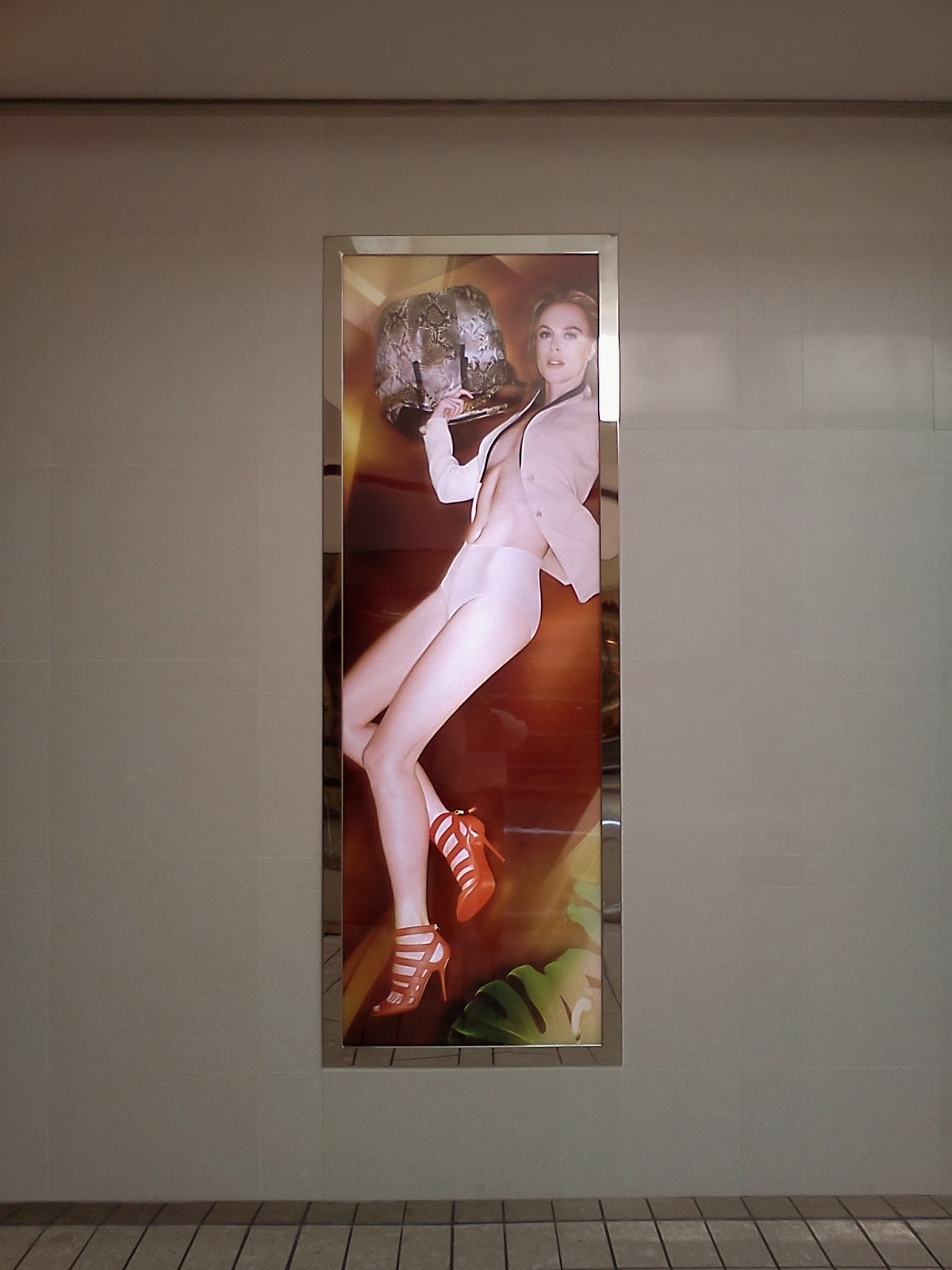
This one's from outside a shoe shop; you see, she's not wearing any pants, so your eyes are naturally drawn to her shoes.
 

Monday, February 10, 2014

Something I Heard: Valentine’s Day Podcasts


I have never been a big fan of Valentine’s Day, largely for the same reasons as other people who are not big fans of Valentine’s Day. Twenty years of marriage has done much to dull my sharp disdain for the holiday, but still… Call it a grudge, if you will.
One of the things I do like, however, is listening to science-fiction and fantasy podcasts while going for walks during my lunch break at work. Two podcasts I listen to regularly are Escape Pod and Lightspeed Magazine. Anyway, I thought I’d recommend some sci-fi stories appropriate to the holiday that you can download and enjoy (or not, depending on your disposition). They come in three flavors: Sweet, bittersweet, and so, so bitter.

(Incidentally, I recommended some of these stories last year on my Facebook page, but didn’t really have the space to talk about them.)
Sweet: The first recommendation under the heading of “sweet” is “Impossible Dreams” by Tim Pratt, Escape Pod Episode 105 from May 2007. This is the story of a film nerd who finds a video rental place with a very unusual selection of movies and the girl working behind the counter who doesn’t quite know what to make of him. Tim Pratt’s had a bunch of his short stories podcast on Escape Pod and this one was a 2007 Hugo Award nominee. This is a sweet story for how it captures how exciting it is to meet someone who shares your passions and really gets you, even before the possibility of romance arises.
Not playing anywhere
 
The second story in the “sweet” category is “My Wife Hates Time Travel” by Adam-Troy Castro, Lightspeed Magazine September 2012. As it turns out, my wife hates podcasts. Fortunately, the page includes a text-on-screen version in addition to the audio version so I was able to share it with her. And I really wanted to share it with her. It’s that sweet. In this story, a couple knows that one of them is destined to invent time travel. They don’t know which one of them it is; all they know is they can’t get a moment’s peace thanks to the non-stop interference of their future selves.
 
Bittersweet: “I Look Forward to Remembering You” by Mur Lafferty is a bittersweet story from Escape Pod, July 6, 2006. Mur Lafferty’s also had a bunch of stories on Escape Pod and was the site’s editor-in-chief for awhile. This is the story of a woman who’s reached a point in her life where all she has is her memories. That’s not entirely right; she also has wealth and access to time travel technology and hires a service to go back in time and give her better memories. I love this story but, fair warning, it made me cry.

 It also references Ranma ½, which is awesome.
“I’m Alive, I Love You, I’ll SeeYou in Reno” by Vylar Kaftan from Escape Pod episode 243, June 1, 2010, is a tale of love and time dilation and a couple who never quite makes it work but are never far from each other’s thoughts even over centuries and light-years. This is a pretty good story, but the definitive story of love (and war) and time dilation remains Joe Haldeman’s novel The Forever War.
Bitter: Finally, there are the bitter stories. “Love Might Be TooStrong a Word” by Charlie Jane Anders is from the August 2012 podcast of Lightspeed Magazine. If you think love stinks, especially this time of year, then imagine how much worse it might be with a rigid class system and four or five extra genders (and corresponding pronouns). Answer: Lots.

Then there’s Robert Silverberg’s “Ishmael in Love,” Escape Pod episode 113, July 5, 2007, originally published July 1970. So very bitter. It’s a story of a dolphin named Ishmael and the marine biologist he longs for. Anyone can tell at a glance that this is a relationship that will never, ever work except for Ishmael. Dolphins are supposed to be intelligent, but as Escape Pod host Stephen Eley notes in the afterword, we’ve all been the dolphin.
Here’s hoping you’re not the dolphin this year, but if you are, remember, February 15 is Discount Chocolate Day.